
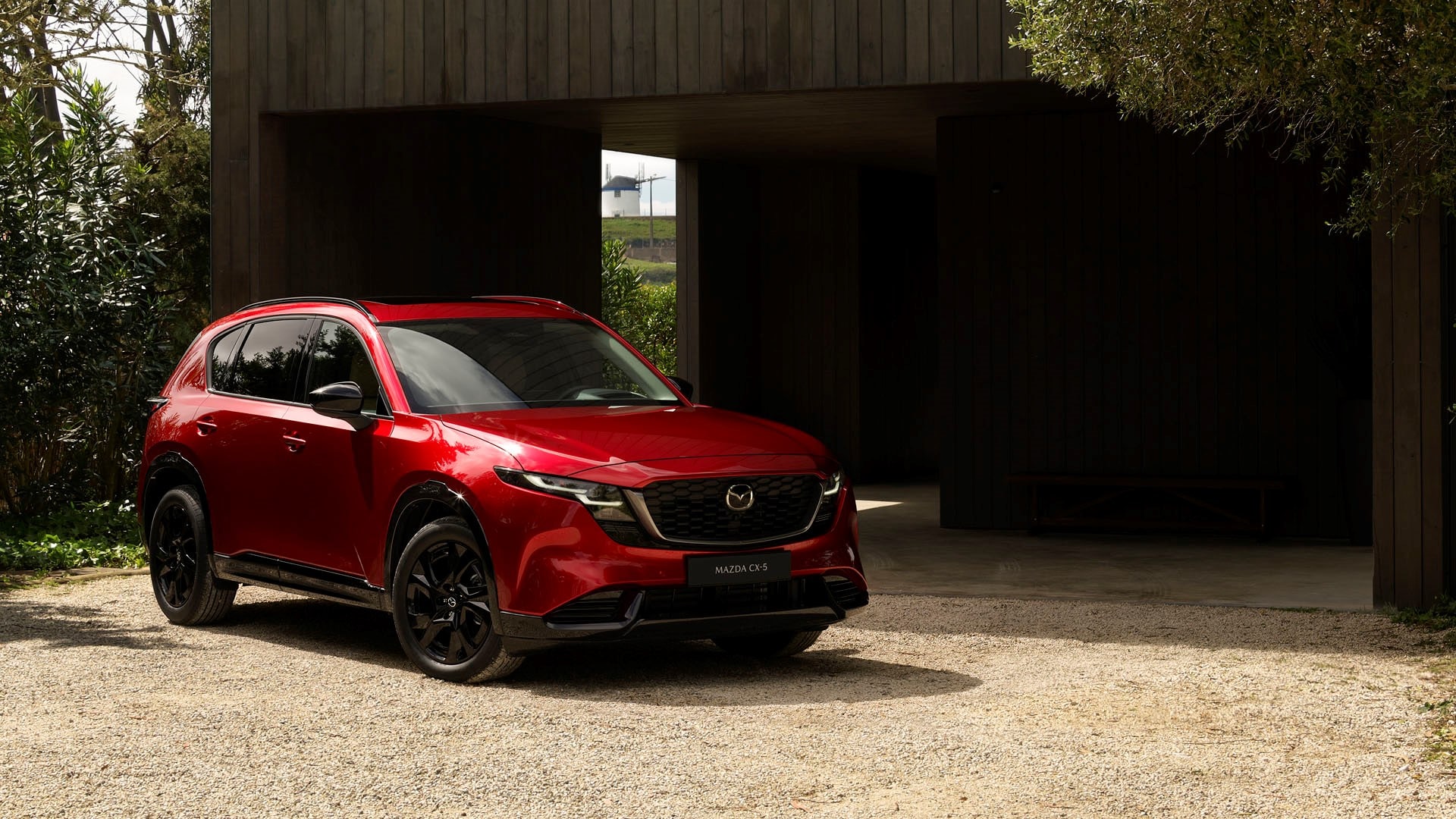
The new CX-5 is 4.5 inches longer than the one it replaces, and every one of those inches went between the front and rear wheels rather than into the bumpers. That is why the extra size shows up where people sit.
Passengers in back get more room for legs, knees, and heads. The doors open wider, which matters most to anyone who has wrestled a car seat through a narrow gap. The cargo area runs almost two inches longer and over an inch taller, and the lip you lift things over sits more than half an inch lower.
Five versions are sold, all with the same engine. Prices start at $29,990 and climb through $31,990, $34,250, and $36,900 to $38,990 at the top, with a $1,595 delivery charge on each.
At 15.6 inches, the dashboard screen it is the largest Mazda has ever put in a vehicle, and it comes only on the higher version. The other four get a 12.9-inch screen. All five run Google software, with Google Maps and the Play Store built in and the Gemini assistant promised later.
All-wheel drive is standard on every version rather than an extra. So is cruise control that holds its distance in traffic, and a warning when something sits in your blind spot. The top version adds a camera view that shows the car from above, headlights that turn with the road, and a system that tracks whether the driver is still paying attention.
Under the hood, little changed. The 2.5-liter four-cylinder carries over at 187 horsepower with a six-speed automatic. Mazda retuned how it answers the pedal and fitted new shock absorbers, and added a driving mode selector with normal, sport, and off-road settings, but the engine itself is the one from before. A hybrid version arrives for 2027, the first CX-5 hybrid sold in the United States.
Mazda has sold more than 1.6 million CX-5s in the United States since 2012, and 4.5 million worldwide.
